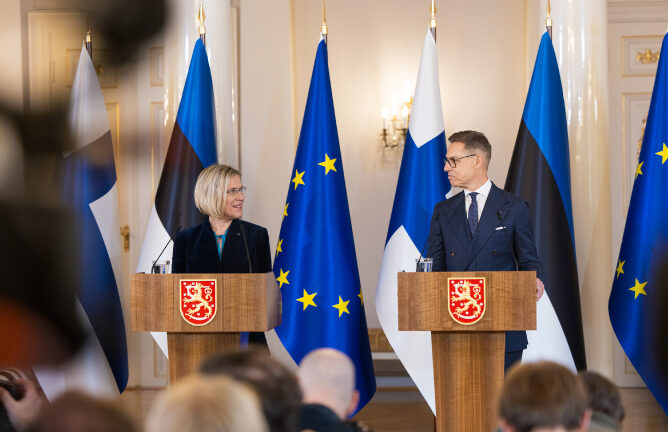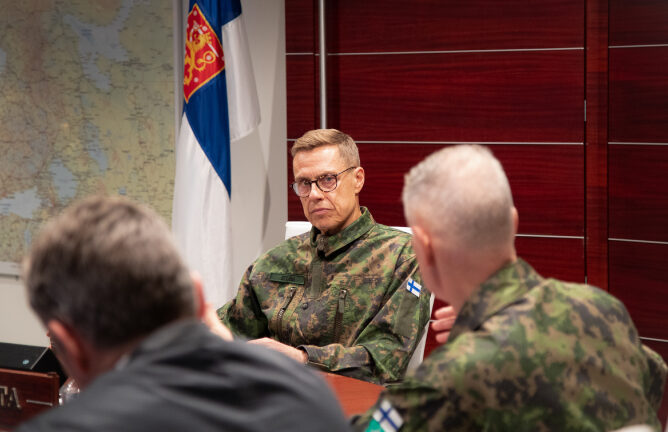
President of the Republic of Finland Alexander Stubb hosted the Kultaranta Talks on 11–12 June 2026 at the Presidential Summer Residence Kultaranta in Naantali. This year’s theme for the foreign and security policy discussions was A World in Transition – Global, Regional and Local Perspectives.
President Stubb commented on the first day of the event by making observations about the current state of the world and the kind of development we hope to see.
The President emphasised that the number of conflicts in the world is currently increasing. At the same time, conflicts have shifted from being local to becoming regional, and they are also having global consequences. He also pointed out that many countries around the world are experiencing problems in their relationships with neighbouring countries. In addition, the multilateral system is being challenged in several parts of the world, creating pressure for change in many countries.
Regarding the future, the President expressed hope that efforts to defend the multilateral system would continue, and stressed the importance of building new alliances. He added that we need leaders who understand the importance of the UN and the Global South.
“International relations, diplomacy and politics are not at a standstill; they are constantly moving. Even if the direction currently feels uncomfortable to us, it does not mean that the change will not ultimately be for the better,” President Stubb said.
Summarising the second day’s discussions, the President said that the pressure for Europe to change is largely external. The constraints on change, on the other hand, come from within Europe itself. He questioned whether Europe is capable of making full use of the present moment. “Enlargement is the best foreign policy instrument in Europe’s history,” the President summed up.
He also remarked that Finland is the most integrated into Europe among the Nordic countries. “I still consider it very important that Finland remains at the heart of the European Union,” she said.
The President further observed that we are fortunately in a situation where Ukraine is militarily, politically and economically in a significantly better position than ever during the ongoing war.
During the panel on Russia, participants discussed reopening channels of dialogue. The President stated that no timeline exists at present, noting that such dialogue will require not only the right timing and setting but also trust: “We do not yet know when this will happen”.
Turning to geoeconomics and technological competition, the President pointed out that success in technological competition is never achieved through nostalgia. “The winner is the one who understands what the next technology is,” he noted. Among Finland’s strengths, areas such as quantum and satellite technology were highlighted.
Concluding his remarks, President Stubb described himself as an optimistic realist regarding Finland and Europe: “Amid the crises of recent years, we have learned to adapt to a reality in which change is driven by pressure from both Russia and the United States.”
Discussions opened with a global perspective
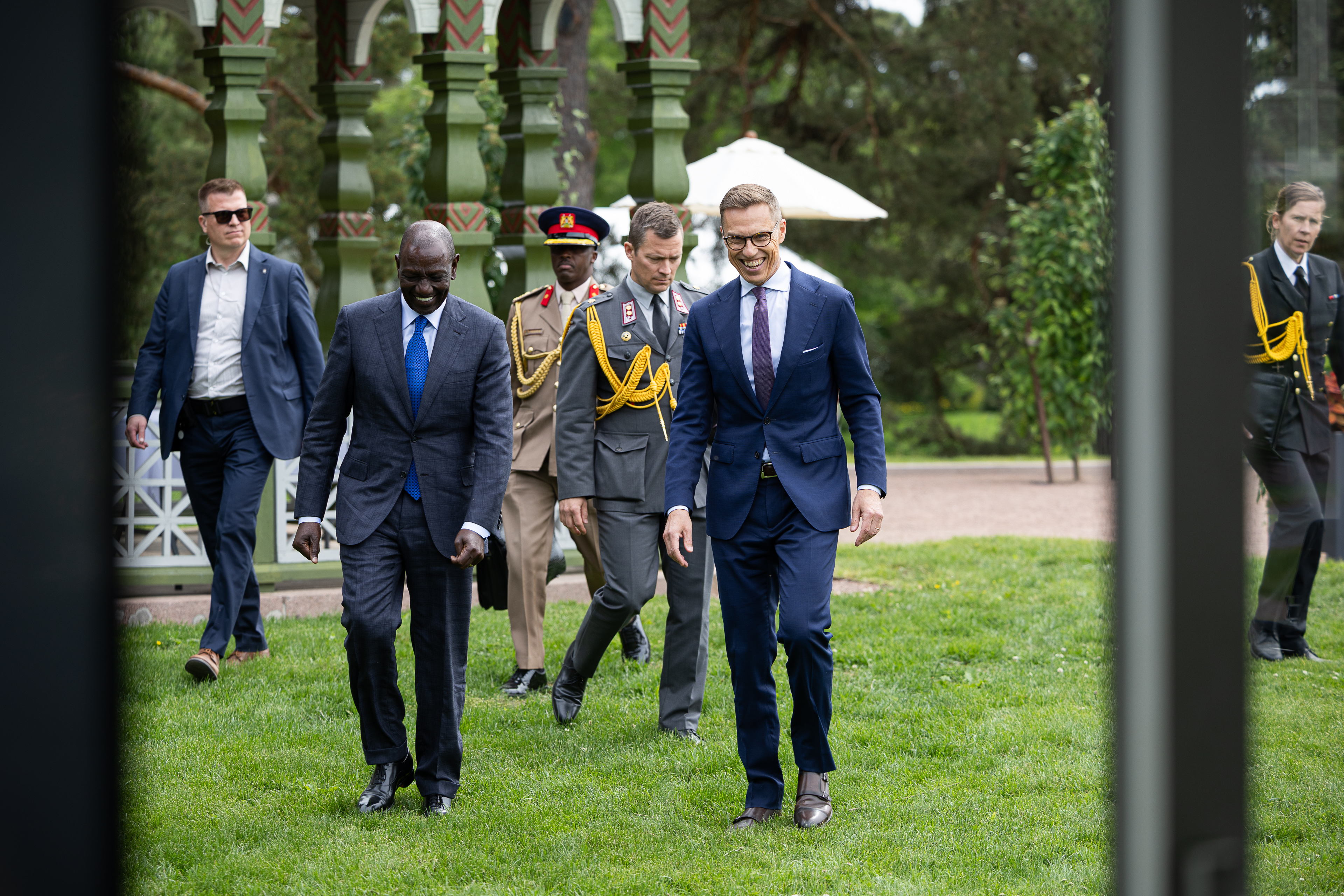
The Kultaranta Talks opened on Wednesday 11 June with a discussion between President Stubb and President of Kenya William Ruto.
The second panel focused on Asian geopolitics and the situation in the Indo-Pacific region, featuring Takeo Akiba, Senior Advisor to the Cabinet in Japan’s Prime Minister’s Office; Kevin Rudd, Global President & CEO of Asia Society, former Australian Prime Minister; and Samir Saran, President of the Observer Research Foundation.
The third discussion addressed emerging major powers and the new geopolitical competition. The panellists included Subrahmanyam Jaishankar, External Affairs Minister of India; Lana Nusseibeh, Minister of State at the UAE Ministry of Foreign Affairs, and Elina Valtonen, Minister for Foreign Affairs of Finland.
The final panel on Thursday examined Europe, transatlantic relations and global competition. The panel brought together Fiona Hill, Senior Fellow at the Brookings Institution; Wolfgang Ischinger, Chairman of the Munich Security Conference; and Mark Leonard, Director of the European Council on Foreign Relations.
The day concluded with President Stubb’s closing remarks
Finland’s role in a world in transition
On Friday 12 June, the discussions continued in Finnish, focusing on Finland and Europe. In the first panel, Members of the European Parliament Merja Kyllönen, Ville Niinistö and Aura Salla discussed the ongoing transformation of the global order.
The second panel discussed Russia and its future, with contributions from Hiski Haukkala, Director of the Finnish Institute of International Affairs; Harri Ohra-aho, Major General (ret.); and Laura Solanko, Senior Adviser at the Bank of Finland.
The final panel explored Finland’s position in the geoeconomic and technological competition. Participants included Marko Ahtisaari, Chief Marketing Officer at ICEYE and Chair of the Board of CMI; Minna Kuusisto, Chief Economist at Danske Bank; and Peter Sarlin, Chair of the Board at PostScriptum and Professor of Practice at Aalto University.
Approximately 160 participants from various sectors of society were invited to this years edition of the Kultaranta Talks. The participants included both Finnish and international political decision-makers, researchers, and representatives of the public administration, business, organisations and the media. The event was held at Kultaranta, the summer residence of the President of the Republic of Finland in Naantali.
The Finnish Broadcasting Company (YLE) broadcast the two-day event live on Yle Areena.
Fotogalleri

Participants of the Kultaranta Talks 2026
The President of the Republic Alexander Stubb Mrs Suzanne Innes-Stubb – H.E. Hon William Samoei Ruto, C.G.H., President of the Republic of Kenya H.E. Dr Subrahmanyam Jaishankar, External Affairs Minister…